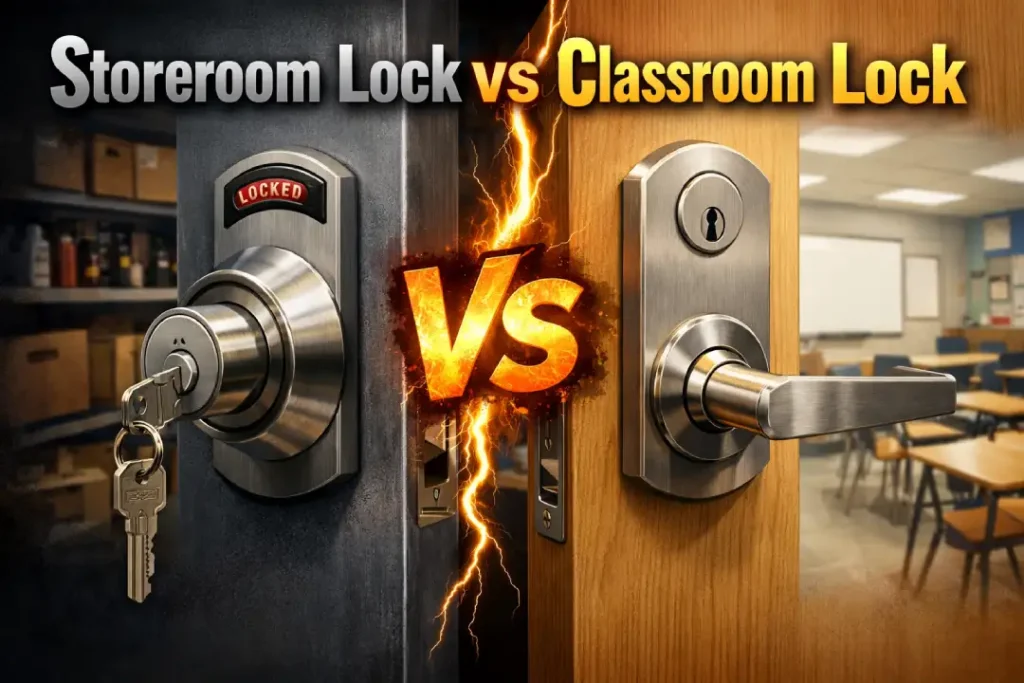
Selecting the wrong door hardware can lead to frustrating security lapses or dangerous accidental lockouts. When comparing a Storeroom Lock vs Classroom Lock often leads to security gaps or operational headaches, such as accidental lockouts in high-traffic zones or sensitive areas left unintentionally open. At Locksmith Singapore, we eliminate this confusion by matching the specific security needs of your facility with the right mechanism, ensuring both safety compliance and ease of use. Our professional team provides expert installation and advice, helping you secure your premises effectively while preventing the common pitfalls of incorrect lock selection.
What Are Lock Functions?
Before diving into the specific types of locks, it’s important to understand lock functions. A lock function refers to how the lock operates in terms of accessibility, security, and emergency egress. It defines whether the door remains locked from the outside, how the inside handle behaves, and what kind of key or credential is required to operate it. Common lock functions in schools and commercial spaces include entry locks, classroom locks, storeroom locks, and passage locks.
Understanding lock functions is essential for safety and compliance. For example, fire and safety codes in Singapore require that interior doors allow easy exit in emergencies. Choosing a lock with the right function ensures your doors meet local regulations while providing the right level of access control.
What Is a Storeroom Lock?
A storeroom lock is a lockset specifically designed for areas that require restricted access. In a storeroom lock, the exterior side of the door is always locked, requiring a key to enter, while the interior always allows free exit. This makes it ideal for storage rooms, supply closets, and utility areas where sensitive equipment or valuable items are kept.
How Storeroom Locks Work
Storeroom locks operate by keeping the outside cylinder locked at all times. Even if someone inside forgets to lock the door, the outside remains secured. The inside lever or knob always allows egress, meeting safety requirements in case of emergencies. Storeroom locks are commonly available in cylindrical or mortise lock types, and modern variants include electronic keyless options for added convenience.
Applications in Singapore Facilities
In Singapore, storeroom locks are widely used in schools, offices, retail outlets, and hospitals. They are particularly useful in locations where access must be limited to authorized personnel only. For example, a school might use a storeroom lock for its AV equipment storage, ensuring that only staff members with keys can enter, while still allowing anyone inside to exit safely.
Pros and Cons of Storeroom Locks
Pros:
- High security for restricted areas
- Prevents unauthorized entry
- Always allows a safe exit from inside
Cons:
- Requires a key for every entry, which may be inconvenient for frequent access
- May need regular maintenance to ensure smooth operation
Variations and Modern Options
Today, storeroom locks come in both mechanical and electronic formats. Electronic storeroom locks can be operated with keycards, PIN codes, or even biometric credentials, offering flexible access management for offices or educational institutions. We provide installation, repair, and electronic upgrade services for all types of storeroom locks in Singapore, ensuring secure and convenient access control.
What Is a Classroom Lock?
A classroom lock is designed to provide controlled access while maintaining safety for occupants inside the room. Unlike a storeroom lock, a classroom lock allows authorized personnel to lock or unlock the door from the outside, while always permitting free egress from the inside. This design is especially important in educational settings, where teachers may need to lock classrooms for security while ensuring students can exit quickly in emergencies.
How Classroom Locks Work
Classroom locks typically feature a key-operated cylinder on the exterior and a free-turn lever or push bar on the interior. This means the door can be secured from the outside, while anyone inside can leave without using a key. Many classroom locks in Singapore now include enhanced safety features, such as compatibility with ADA requirements and emergency egress compliance, making them suitable for schools, daycare centers, and office meeting rooms. In schools and offices, proper door alignment is just as important as choosing the right lock
Applications in Singapore Facilities
Classroom locks are ideal for schools, tutorial centers, training facilities, and offices where controlled access is necessary but frequent entry is expected. They prevent unauthorized entry during class hours while providing a quick exit during emergencies. Schools in Singapore often combine classroom locks with electronic access systems or CCTV monitoring to increase overall security. We offers professional installation and maintenance of classroom locks to ensure compliance and reliability.
Pros and Cons of Classroom Locks
Pros:
- Easy to operate and manage for teachers or authorized personnel
- Provides moderate security while ensuring safety inside
- Can be integrated with modern access control systems
Cons:
- Slightly less secure than storeroom locks if key control is not managed properly
- May require regular monitoring to ensure doors are locked during non-class hours
Storeroom Lock vs Classroom Lock: Side‑by‑Side Comparison
Understanding the key differences between storeroom and classroom locks helps facility managers choose the right lock for their specific needs. The following table summarizes their primary features:

| Feature | Storeroom Lock | Classroom Lock |
| Exterior Lock Behavior | Always locked, key required | Can lock/unlock with a key |
| Interior Egress | Always free | Always free |
| Ideal Usage | Storage rooms, utility areas, restricted access | Classrooms, offices, meeting rooms |
| Security Level | High | Moderate |
| Convenience | Lower for frequent access | Higher for frequent access |
| Modern Variants | Mechanical, electronic, keyless | Mechanical, electronic, smart locks |
Security Considerations for Each Lock Type
When selecting between a storeroom lock and a classroom lock, it is crucial to consider physical security, compliance, and emergency preparedness.
Physical Security and Tamper Resistance
Storeroom locks are inherently more secure against unauthorized access because the outside remains locked at all times. Classroom locks, while secure, require proper key management to prevent misuse. In Singapore, using ANSI/BHMA graded locks can enhance reliability and durability for both lock types.
Compliance and Safety Codes
Both lock types must comply with fire safety regulations and building codes in Singapore. Interior doors must allow quick egress, and locks should not impede evacuation routes. Classroom locks often incorporate features for emergency scenarios, while storeroom locks prioritize access control for restricted areas.
Emergency Lockdown and Safety Best Practices
Modern schools and offices are increasingly combining locks with electronic access control systems, remote monitoring, and panic exit mechanisms. This ensures that in the event of an emergency, doors can be secured or opened safely as needed. We can assess your current locks and recommend upgrades or integrations for maximum security and safety compliance. For regulated buildings, exit doors must stay openable and unobstructed during occupancy, as in Singapore’s Fire Code.
When to Choose a Storeroom Lock
A storeroom lock is the ideal choice when your priority is strict access control and high security. In Singapore, facilities such as schools, offices, clinics, and retail stores often use storeroom locks for:
- Storage rooms containing equipment, documents, or sensitive materials
- Utility rooms with restricted tools or cleaning supplies
- Areas with a low frequency of authorized entry
Storeroom locks ensure that only designated personnel can access critical spaces, reducing the risk of theft or unauthorized entry. For professional installation or upgrades, we provides reliable services for storeroom locks, including keyless and electronic options.
When to Choose a Classroom Lock
Classroom locks are better suited for spaces that require controlled access but frequent usage. Typical Singapore applications include:
- Classrooms and tutorial rooms where teachers may need to lock doors temporarily
- Offices or meeting rooms with intermittent access requirements
- Educational facilities need to comply with safety regulations for egress
Classroom locks strike a balance between security and usability, allowing inside occupants to exit safely while restricting unauthorized entry from outside. We can install and maintain classroom locks, ensuring safety and compliance with local standards.
Hybrid and Advanced Lock Options
As technology advances, both storeroom and classroom locks can be integrated into modern access control systems. These hybrid solutions include:
- Electronic keyless locks: Operated via PIN codes, access cards, or biometrics
- Remote monitoring systems: Allow administrators to lock or unlock doors from a central system
- Integrated security setups: Combining locks with CCTV cameras and alarms for comprehensive protection
These options are particularly useful for schools, offices, and commercial buildings in Singapore seeking a combination of convenience, safety, and enhanced control. Locksmith Singapore specializes in electronic and smart lock installations for both storerooms and classrooms, offering tailored solutions for every facility.
Frequently Asked Questions About Storeroom Lock vs Classroom Lock
1. Can I change a lock from the storeroom to a classroom function?
Most mechanical locks are not field-convertible. Changing functions usually requires replacing the lockset to ensure correct operation.
2. Are classroom locks safe during emergencies?
Yes, classroom locks allow free egress from the inside, meeting safety regulations. Electronic upgrades can further improve security without compromising safety.
3. What is the difference between a storeroom lock and a deadbolt?
A storeroom lock refers to the lock function (always locked outside, free exit inside), whereas a deadbolt refers to the mechanical design of the lock.
4. Can a classroom lock be used for a storage room?
It is not recommended, as a classroom lock may not provide the high security needed for restricted areas.
5. What lock grade should I use for classrooms or storerooms in Singapore?
ANSI/BHMA grade 1 or 2 locks are typically recommended for commercial and educational facilities to ensure durability and security.
Conclusion: Choosing the Right Lock
Choosing between a storeroom lock and a classroom lock requires understanding access requirements, security needs, and safety regulations. Storeroom locks are ideal for high-security, low-traffic areas, while classroom locks provide controlled access with easy egress for occupied spaces.
For facilities in Singapore, combining the right lock with professional installation and maintenance ensures both safety and convenience. Locksmith Singapore offers expert guidance, installation, and servicing for all types of locks, including electronic and keyless options, ensuring your property, staff, and students remain safe. By making an informed choice, you can secure your facility effectively while maintaining compliance with local standards and accessibility requirements.