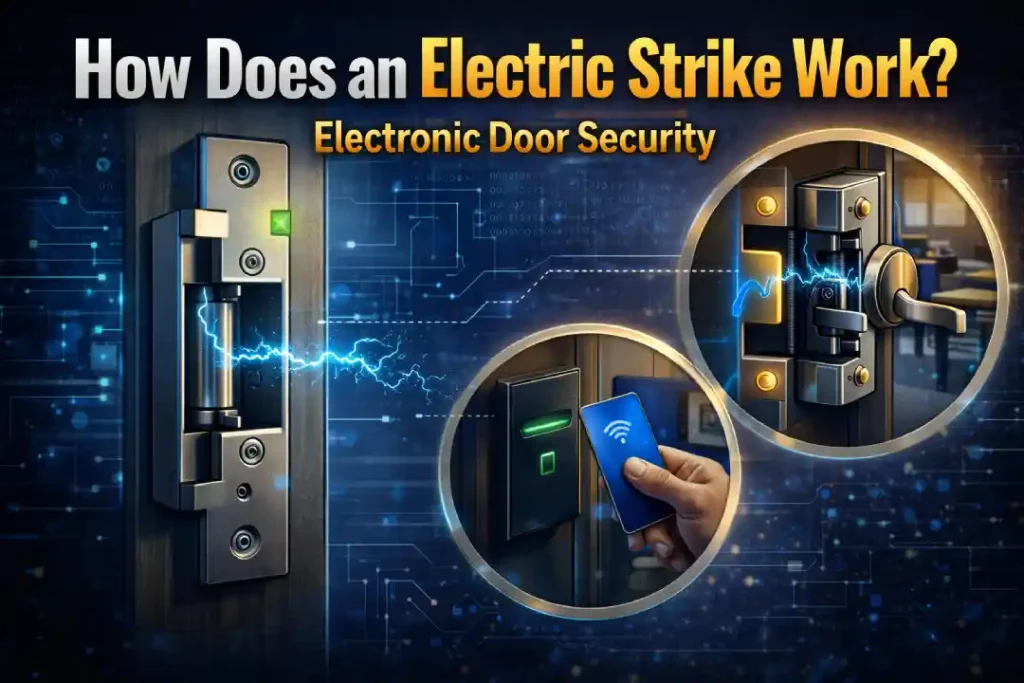
When it comes to securing doors, traditional locks have served their purpose for years. However, with the increasing demand for smarter and more convenient security solutions, electric strikes have become a popular choice. Electric strikes provide a higher level of security, convenience, and integration with modern access control systems. In this comprehensive guide, we’ll explain exactly how electric strikes work, their key components, the different types available, and how they can be used to enhance your security.
In this guide, you’ll have a clear understanding of electric strike locks, their functionality, and why you should consider them for your home or business in Singapore.
What is an Electric Strike?
An electric strike is an advanced locking mechanism that works with an electric current to secure and release doors. Unlike traditional locks that rely on keys or mechanical mechanisms, an electric strike uses an electrical signal to either engage or release the locking mechanism. It is an essential component in modern access control systems, providing a higher level of security and control over who can enter a building or room.
Electric strikes are typically paired with other components like keypads, RFID card readers, or biometric scanners, allowing for keyless entry. They are often used in places that require controlled access, such as office buildings, high-security areas, and residential properties.
Key components of an electric strike include the strike plate, the solenoid, and the armature. The strike plate is mounted into the door frame, and the solenoid is powered to activate the locking mechanism. The armature moves inside the strike plate when the solenoid is energized, allowing the door to unlock. This provides a seamless and secure entry system.
Electric Strikes vs. Traditional Locks
Traditional locks typically require a physical key or knob to unlock. In contrast, electric strikes rely on an electrical signal to release or engage the lock, providing a more flexible and secure option. This makes them a popular choice for high-security areas like office buildings, hospitals, and government facilities. The ability to integrate electric strikes with access control systems adds layer of security, as the system can be programmed to grant or deny access based on user credentials.
Electric strikes can be installed on various types of doors, including wooden, metal, and glass doors, making them versatile for a wide range of applications. They also offer the added convenience of remote access control, allowing you to open doors without needing a physical key.
How Does an Electric Strike Work?
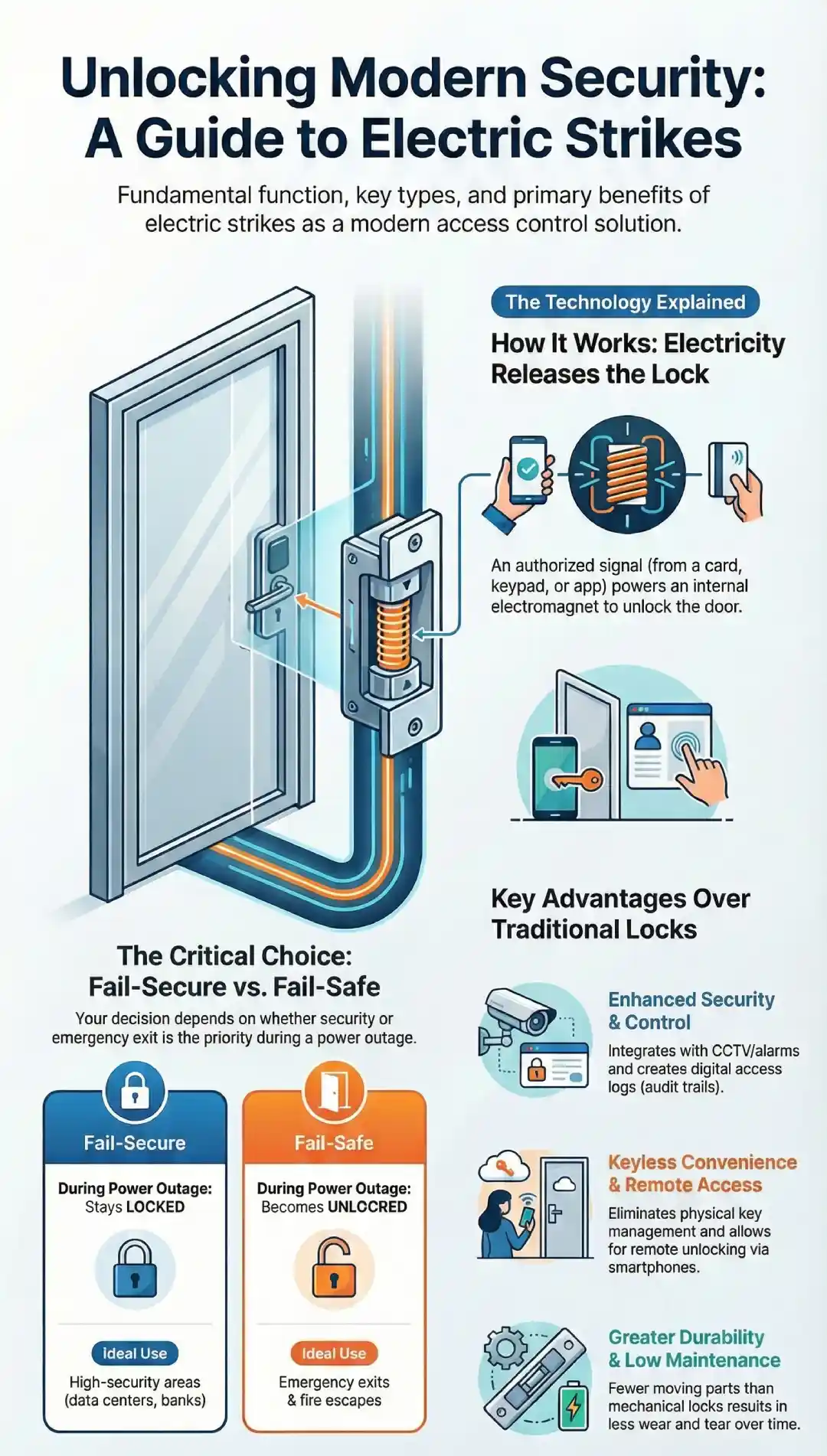
Electric strikes function by using an electric current to control the locking mechanism. When the correct signal is sent, the electric strike is activated, and the locking mechanism is released, allowing the door to open. Here’s how it works step-by-step:
- Power Activation: When an authorized person activates an access control system, such as swiping an RFID card or entering a code on a keypad, it sends an electrical signal to the electric strike.
- Magnetic Field Creation: The electrical signal powers the solenoid, which creates a magnetic field. This magnetic field activates the armature inside the strike plate.
- Latch Release: The solenoid’s magnetic field pulls or moves the armature, which releases the latch that holds the door closed.
- Access Granted: With the latch released, the door can now be opened. Once the door is closed again, the electric strike will lock automatically, ensuring security.
The entire process is quick and seamless, offering secure access while reducing the risk of unauthorized entry.
Triggering the Electric Strike
Electric strikes can be triggered in various ways, depending on the type of access control system in place. One of the most common methods is keypad entry, where a user enters a code to trigger the release of the strike. Another common method is RFID card access, where the user swipes their card or uses a key fob to unlock the door.
In more advanced systems, electric strikes can be integrated with biometric scanners, such as fingerprint or facial recognition, for an even higher level of security. These systems ensure that only authorized individuals can access a building or room, providing better control and reducing the risk of unauthorized entry. Electric strikes can also be triggered remotely through smartphone apps or intercom systems, offering additional convenience and flexibility.
Power and Voltage Requirements
For an electric strike to function properly, it requires a stable power supply. The most common voltages used are 12V DC or 24V DC. These voltages are typically provided by a central power supply unit or integrated into the existing security system. The power is necessary to activate the solenoid and trigger the locking mechanism.
It’s important to ensure that the voltage requirements of the electric strike match the existing system. Mismatched power supplies can result in malfunctioning electric strikes or even permanent damage to the system.
Types of Electric Strikes
There are two main types of electric strikes based on their installation method: surface-mounted and mortise.
Surface-Mounted vs. Mortise Electric Strikes
Surface-mounted electric strikes are the most common type. These strikes are installed on the surface of the door frame and are typically easier to install. They are ideal for retrofitting existing doors, as they require less modification. Surface-mounted electric strikes are also more affordable and can be used with most types of doors.
Mortise electric strikes, on the other hand, require a cut-out or pocket in the door frame to accommodate the strike. They are typically more secure and are ideal for new construction or high-security areas where strength and durability are crucial. Mortise electric strikes are more permanent and require a more involved installation process. Professional installation ensures the electric strike is aligned and integrated with your existing access control system.
Fail-Secure vs. Fail-Safe Electric Strikes
When selecting an electric strike, one of the most important decisions is whether to choose a fail-secure or fail-safe model.
- Fail-Secure Electric Strikes: These remain locked when the power is lost, ensuring that unauthorized individuals cannot gain entry during a power failure. They are commonly used in high-security areas, such as data centers and government buildings, where unauthorized access must be prevented at all costs.
- Fail-Safe Electric Strikes: These remain unlocked if the power goes out. This is important in situations where we give emergency access is needed, such as emergency exits or fire escapes. Fail-safe electric strikes are often required by building codes in places where rapid evacuation is necessary in the event of an emergency.
Choosing between fail-secure and fail-safe models depends on the level of security needed and the specific application of the electric strike.
Choosing the Right Electric Strike for Your Needs
When choosing the right electric strike, consider factors such as:
- Security needs: Do you require high-level security or just a basic access control system?
- Type of door: Is your door wooden, metal, or glass? Different types of electric strikes work better with different materials.
- Power requirements: Make sure the electric strike is compatible with the voltage available in your system.
- Integration with access control: Ensure that the electric strike works seamlessly with your existing access control system, whether it’s keypad entry, RFID access, or biometric authentication.
By carefully considering these factors, you can choose the right electric strike to meet your security needs.
Benefits of Electric Strikes
Electric strikes come with a variety of benefits that make them a superior choice over traditional locking mechanisms. The following are some of the key advantages of using electric strikes:
Improved Security
One of the primary reasons people choose electric strikes over traditional locks is security. Electric strikes are part of an electronic access control system, which offers several key features that increase security. For instance, keycards or biometric authentication methods are much harder to duplicate or tamper with compared to physical keys. Additionally, electric strikes can be integrated with CCTV systems and alarm systems, providing real-time monitoring and notifications if unauthorized access is attempted.
Another benefit of electric strikes is that they can be monitored. Many electric strike systems come with an audit trail that records who accessed the door and at what time, offering an added layer of accountability for businesses and residential complexes.
Convenience and Time-Saving
Electric strikes are incredibly convenient because they eliminate the need for physical keys. For businesses, this is especially beneficial as it removes the hassle of key management. Access can be granted using a keypad code, RFID card, or biometric scan, which makes entry faster and more efficient. Additionally, electric strikes can be integrated into smart home systems that allow for remote access, which can be controlled from a mobile device. This means you can open doors for guests, family, or employees, no matter where you are.
For commercial properties, electric strikes are often part of a keyless entry system, making it easier to manage employee access to different parts of a building. Systems can be programmed to allow certain individuals access to specific doors at certain times, providing greater flexibility and control. Electric strikes are commonly used in high-security environments like data centers and government buildings, where strict access control is essential.
Long-Term Durability and Low Maintenance
Electric strikes are built to last longer than traditional mechanical locks. With fewer moving parts, there is less wear and tear, resulting in fewer repairs and replacements. The solenoid mechanism is designed for durability, ensuring that the electric strike continues to function properly over time with minimal maintenance.
Furthermore, electric strikes are low-maintenance. Routine checks and occasional lubrication are usually all that’s needed to ensure they continue to work properly. This is particularly important for businesses and high-security areas where the locks are used frequently.
Integration with Other Security Systems
Electric strikes can easily integrate with other security systems in your building, creating a more comprehensive security solution. For example, they can be connected to video intercoms, access control panels, CCTV cameras, and alarms. This integration allows for centralized monitoring and control of all entry points, ensuring that security is more streamlined and effective.
For businesses that require high levels of access control, electric strikes can be programmed to work in conjunction with other access control measures. For example, only certain personnel may be able to enter specific areas based on the security protocols set within the access control system.
Common Applications of Electric Strikes
Electric strikes are highly versatile and can be used in a wide range of residential, commercial, and industrial applications. Their adaptability makes them suitable for various types of access control systems.
Residential Use
As more people adopt smart home technologies, electric strikes are becoming increasingly common in residential properties. Homeowners can replace traditional locks with keyless entry systems that integrate with smartphones or smart door locks. This means they no longer have to worry about losing keys or forgetting to lock the door.
Electric strikes can also be installed on gates, garage doors, or entry points to increase security around the home. By integrating with home automation systems, homeowners can control access to their property remotely, providing greater peace of mind.
Commercial Use
In commercial buildings, electric strikes are commonly used to secure office spaces, conference rooms, and restricted areas. With keycard access, employees and visitors can enter certain areas based on pre-programmed access schedules. This reduces the risk of unauthorized access and allows businesses to maintain control over their premises.
Electric strikes are also used in high-traffic areas, such as lobby doors and entrance points in commercial buildings, because they allow quick and easy access without compromising security. The ability to track entry logs and monitor who enters and exits the building adds layer of accountability and transparency.
High-Security Applications
Electric strikes are widely used in high-security applications, such as banks, government buildings, and data centers. These facilities require tight access control to prevent unauthorized individuals from gaining entry. Electric strikes ensure that only authorized personnel can access certain areas, and they can be integrated with biometric authentication systems, such as fingerprint or facial recognition, for even more security.
In some cases, electric strikes are used in high-security doors and vaults that require specific access permissions. These systems can be programmed to grant access to certain people or groups while denying entry to everyone else.
Troubleshooting Common Electric Strike Issues
Electric strikes are generally low-maintenance systems, but like any electronic device, they can encounter issues from time to time. Here are some common problems and troubleshooting tips:
Power Failure
If the electric strike stops working, the first thing to check is the power supply. Electric strikes require constant power to function. If the power supply is cut off, the strike will not be able to operate. Ensure that the power source is working and that there are no issues with the wiring or connections.
Misalignment of Strike Plate
If the electric strike is not releasing the latch correctly, the strike plate may be misaligned. This can happen if the door or frame shifts over time. Adjusting the strike plate’s position can help resolve the issue.
Faulty Solenoid
If the electric strike is not unlocking, it could be due to a malfunction in the solenoid. In some cases, the solenoid may need to be replaced or repaired. Ensure the solenoid is properly connected and functioning.
When to Replace Your Electric Strike
While electric strikes are durable and require minimal maintenance, they may need to be replaced if:
- They are malfunctioning, and repairs are no longer effective.
- The warranty period has expired, and the system has reached the end of its useful life.
- The electric strike is outdated and no longer compatible with newer access control technologies.
Installation and Maintenance of Electric Strikes
Electric Strike Installation Guide
Installing an electric strike typically requires professional installation to ensure proper alignment and integration with the existing access control system. The installation process involves:
- Preparing the door frame: Depending on whether you’re installing a surface-mounted or mortise strike, you’ll need to prepare the door frame.
- Wiring the electric strike: The electric strike will need to be wired to a power supply and connected to the access control system.
- Testing the system: After installation, the system must be thoroughly tested to ensure that the electric strike is releasing the door latch correctly.
While DIY installation is possible, it’s recommended to hire a professional locksmith Singapore, especially when dealing with high-security systems. Many modern electric strikes follow international standards, like those set by the International Code Council (ICC), for safe and efficient use in commercial properties
Maintenance Tips for Electric Strikes
To keep your electric strike running smoothly, consider the following maintenance tips:
- Regularly check the power supply: Ensure that the power source is functional and that the voltage meets the requirements of the electric strike.
- Inspect the strike plate: Ensure the strike plate is aligned correctly and is free of any obstructions.
- Lubricate the moving parts: Periodically lubricate the solenoid and armature to prevent wear and tear.
- Test the system regularly: Perform routine tests to ensure the strike is functioning as expected.
By following these simple maintenance tips, you can extend the life of your electric strike and avoid costly repairs.
Conclusion: Why Electric Strikes Are a Must for Modern Security Systems
Electric strikes have become an essential element in modern security setups, offering unmatched convenience, security, and efficiency. Whether you are securing a residential property, a commercial building, or a high-security area, electric strikes provide a level of access control that traditional locks simply cannot match. From keyless entry systems to advanced biometric solutions, electric strikes seamlessly integrate with a range of access control technologies to provide reliable and flexible security solutions.
By understanding the mechanisms, benefits, and applications of electric strikes, you can make informed decisions when upgrading or installing an access control system. Whether you’re considering an electric strike lock for your home, office, or other premises, the advantages of these systems in terms of security, convenience, and ease of use are clear.
Locksmith Singapore offers professional installation, maintenance, and troubleshooting for electric strikes. Our experienced team can help you assess your security needs, install the right electric strike solution, and ensure that your system remains in top working condition.