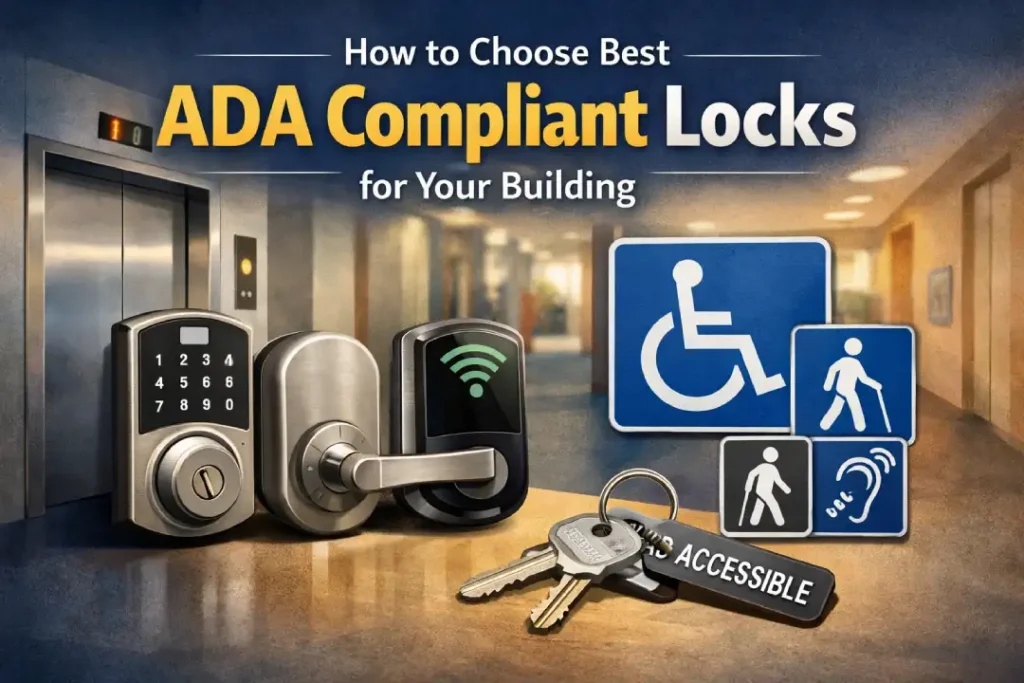
Struggling with outdated door knobs that create physical barriers can leave your facility vulnerable to costly lawsuits and accessibility violations. For many building managers, the primary pain point is navigating the complex maze of federal regulations, where a simple round knob or a stiff deadbolt can lead to thousands of dollars in fines and exclude individuals with limited dexterity. We simplifies this process, helping you Choose Best ADA Compliant Locks by breaking down essential requirements like no-twist lever handles, the 5-pound force limit, and optimal mounting heights.
We provide the expert insights needed to upgrade your hardware to commercial-grade solutions that guarantee both universal access and top-tier security for every occupant.
What Are ADA-Compliant Locks?
ADA-compliant locks are door locks and locking mechanisms designed to meet the accessibility standards set forth by the Americans with Disabilities Act (ADA). These locks ensure that individuals with disabilities, including those who use wheelchairs or have limited mobility, can easily access doors without facing barriers or challenges. ADA-compliant locks are typically used in commercial buildings, public spaces, hospitals, schools, and any other building that must adhere to ADA accessibility guidelines.
The ADA focuses on making sure that all aspects of a building, including entryways, are easy to use for individuals with disabilities. ADA-compliant locks are a key part of this initiative, as they allow individuals to enter and exit buildings without the need for excessive force or complex movements. The guidelines ensure that all door hardware, including locks and handles, are easily operable for a wide range of users.
Why ADA Compliance Matters for Building Owners
ADA compliance is not just about being legally responsible; it’s about providing an equal experience for everyone. In Singapore, businesses and public buildings are required by law to meet accessibility standards for individuals with disabilities. Non-compliance could result in legal action and fines.
Beyond the legal obligations, offering accessible entrances shows that your business or building values inclusivity and safety for all users. Whether it’s for a hospital, school, office building, or retail space, choosing ADA-compliant locks helps foster an inclusive environment. It also provides peace of mind knowing that your building is accessible to everyone, regardless of their physical capabilities.
ADA Compliance Requirements for Locks and Hardware
General ADA Guidelines for Door Hardware
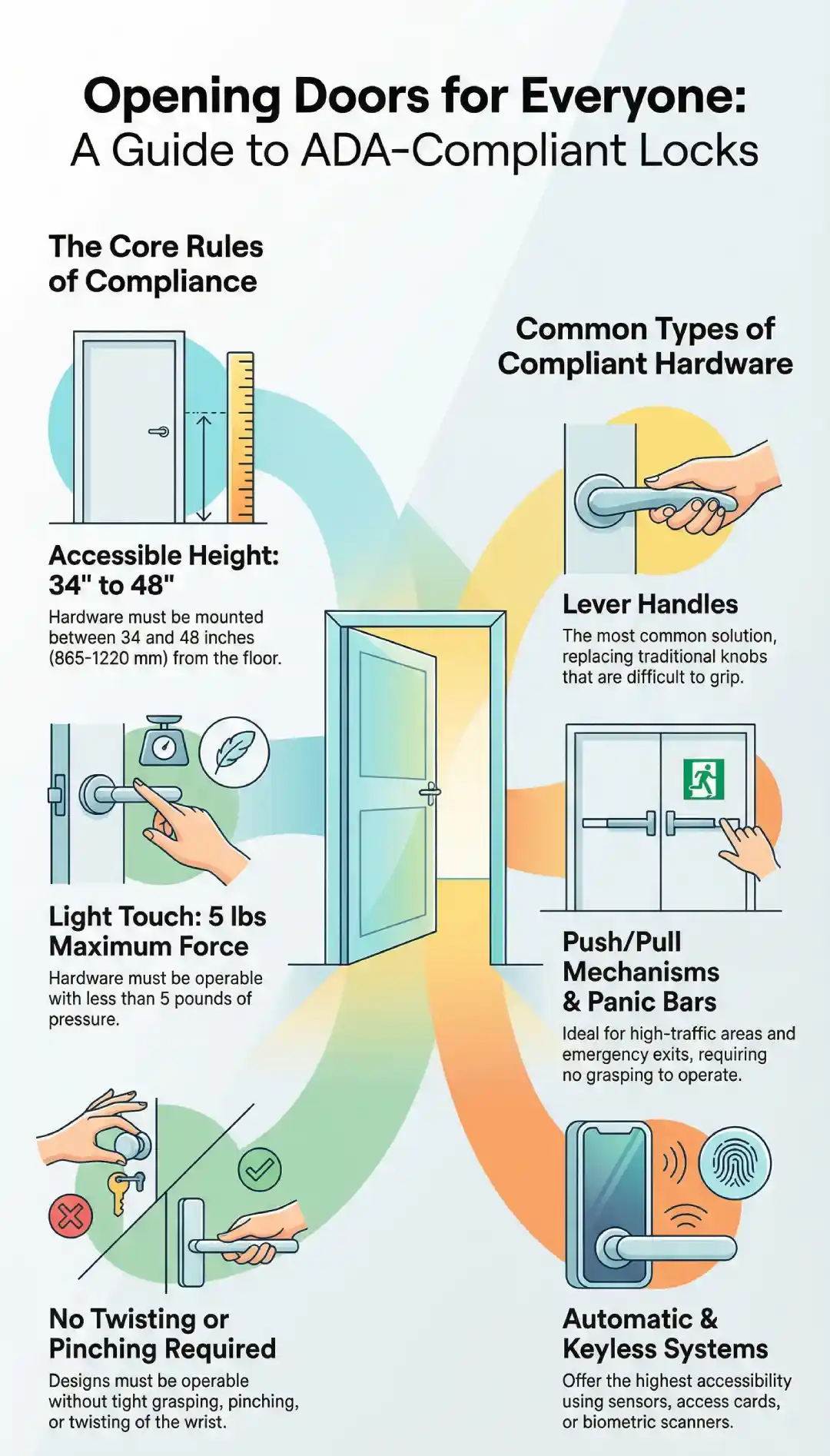
The ADA guidelines for door hardware focus on two primary factors: ease of use and reachability. The purpose is to ensure that people with a range of disabilities, whether mobility-related or visual, can comfortably and safely use the locks. Some of the basic requirements for ADA-compliant locks include:
- Handle Height and Placement: The ADA mandates that handles and locks must be installed within a specific height range. Typically, the handles must be between 34 inches (865 mm) and 48 inches (1220 mm) from the floor, making it accessible for most users, including wheelchair users.
- Easy Operation: Locks must be operable without excessive force. The maximum force required to operate a lock is 5 pounds of pressure, which is significantly lower than what is required for traditional locks.
- Clearance Around the Lock: There must be enough space around the lock for people with disabilities to comfortably reach it. This is especially important for wheelchair users, who need extra clearance space to operate the lock with ease.
- No Pinch Points or Twisting Movements: The lock must be designed so that it doesn’t require twisting or pinching movements. This is particularly crucial for individuals with arthritis or dexterity challenges.
These guidelines ensure that individuals with various disabilities can operate the doors and locks independently and safely.
Specific ADA Requirements for Locking Mechanisms
In addition to general accessibility guidelines, there are specific requirements for locking mechanisms to meet ADA compliance:
- Lever Handles vs. Knobs: The ADA requires the use of lever handles or push/pull mechanisms instead of traditional doorknobs. If you are currently using older hardware, you may need a professional commercial door lock replacement to bring your facility up to code.
- Electronic and Automatic Door Systems: While not a requirement, automatic doors are encouraged for public buildings, especially those with high foot traffic. These systems allow users to open doors with minimal effort, offering greater accessibility.
- Emergency Egress Compliance: In emergencies, doors must be easy to open quickly. The ADA ensures that panic hardware and exit devices meet specific standards, such as push bars and easy-to-operate locking mechanisms that allow quick and safe exit for all individuals, including those with disabilities.
Safety Considerations in ADA Locks
Another important aspect of ADA compliance is ensuring quick egress during emergencies. The ADA ensures that individuals with disabilities can exit buildings quickly and easily. This is why panic bars and exit devices must comply with both ADA and fire safety codes. In addition to ADA guidelines, locks must meet local fire safety codes to ensure that they can be easily opened in case of an emergency. This is particularly important in high-risk areas such as hospitals, schools, and other places where safety is a top priority.
Types of ADA-Compliant Locks and Hardware
Lever Handle Locks
Lever handle locks are the most common type of lock used in ADA-compliant buildings. Unlike traditional round knobs, which are difficult to grip and turn, lever handles are easier to operate as they require less effort. They are also much more accessible for individuals with limited hand strength or dexterity. Lever handles are often used in both interior and exterior doors and are compliant with ADA standards for accessibility.
Best practices for lever handle placement:
- Install between 34 inches (865 mm) and 48 inches (1220 mm) from the floor to meet accessibility requirements.
- Ensure the turning radius of the lever is smooth and does not require excessive force.
Push/Pull Mechanisms
Another popular choice for ADA-compliant hardware is push/pull mechanisms. These are typically used in areas with high traffic, such as hospitals, offices, or schools. Push bars allow individuals to push open doors without needing to grip anything, making them ideal for people with limited hand strength or mobility issues. They are also effective in emergencies, where quick access and exit are necessary.
Push/pull mechanisms are typically found in exit doors, bathroom doors, and commercial spaces. They also comply with ADA guidelines for emergency egress by allowing for a fast and easy opening of the door.
Panic Bars and Exit Devices
Panic bars are another essential component of ADA-compliant locks. These devices are commonly installed in high-traffic commercial buildings like schools, hospitals, and shopping centers, where quick evacuation may be required. Panic bars allow individuals to easily open doors without any twisting or pinching motion, meeting both ADA requirements and fire safety regulations.
The ADA specifies that panic bars must be installed at a height between 34 inches and 48 inches above the floor and must be operable with no more than 5 pounds of pressure.
Automatic Door Operators
Automatic doors provide a seamless and effortless means of entry, especially in buildings that cater to the general public or individuals with mobility impairments. These systems use sensors to detect movement and automatically open the door without requiring physical effort. This is particularly important for wheelchair users or people carrying heavy loads.
Automatic door systems are ADA-compliant if they meet requirements related to sensor sensitivity, activation pressure, and safe, fast door closing. These systems are widely used in high-traffic public spaces and business entrances.
Keyless Entry Systems
Modern keyless entry systems, including biometric and RFID card access, offer a high level of security while remaining compliant with ADA accessibility standards. For businesses looking to enhance security while maintaining accessibility, our digital lock installation services provide a variety of ADA-friendly keyless solutions.
When using keyless entry, it’s important to ensure that the access control system is easily operable by all individuals, regardless of their physical capabilities. ADA guidelines recommend ensuring that the system is user-friendly and that activation methods, such as swiping cards or using biometrics, are easily accessible.
Conclusion: ADA Compliance Is Essential for Accessibility
Choosing the right ADA-compliant locks is not just about meeting legal standards—it’s about creating accessible, safe, and welcoming spaces for everyone. By following the ADA guidelines for door hardware, including the use of lever handles, push/pull mechanisms, panic bars, and automatic door systems, you ensure that your building is accessible to people with disabilities and compliant with local regulations.
If you’re in Singapore and need help choosing or installing ADA-compliant locks, Locksmith Singapore is here to assist. We offer expert guidance on selecting the right hardware, installing it correctly, and ensuring your building meets all necessary accessibility standards. Whether it’s upgrading your current locks or installing new ones, our team has the expertise to help you achieve compliance and create a safer environment for all.
Contact Locksmith Singapore today for a consultation, and let us help you make your building more accessible and secure for everyone.