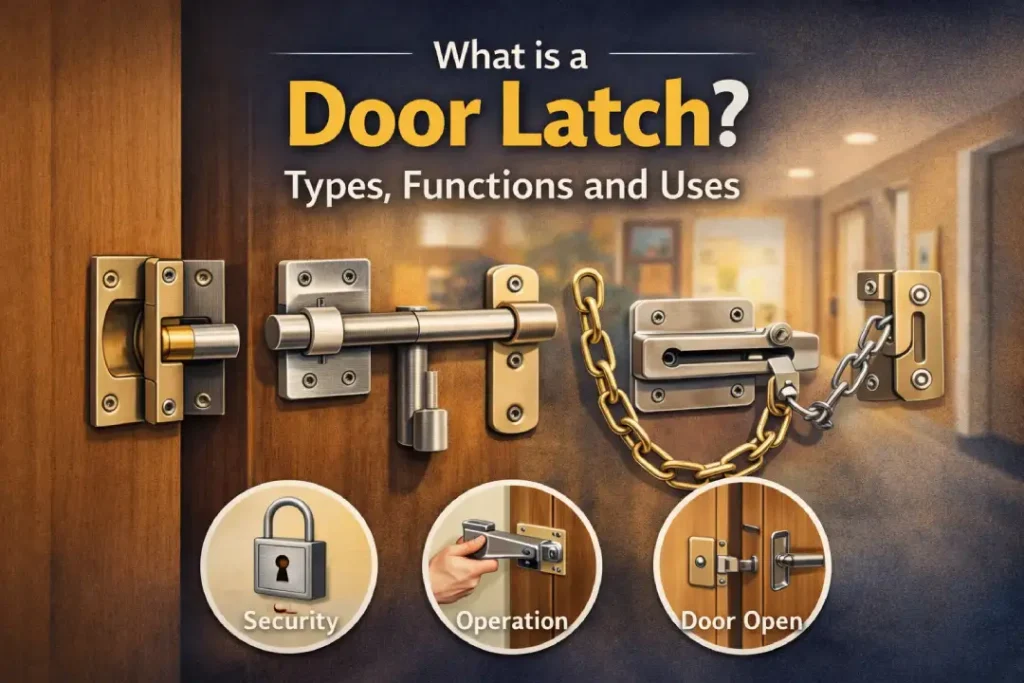
A door that won’t stay shut or a gate that swings open in the wind kills your privacy and peace. Property owners waste time and money on hardware that doesn’t fit the frame or breaks after a few months, leaving constant repairs and safety risks. This explanation clears up what is a door latch, compares spring-loaded bolts to deadlatched, and shows you exactly how to pick the right one for your door, so your home or office stays secure and easy to use.
What Does a Door Latch Do?
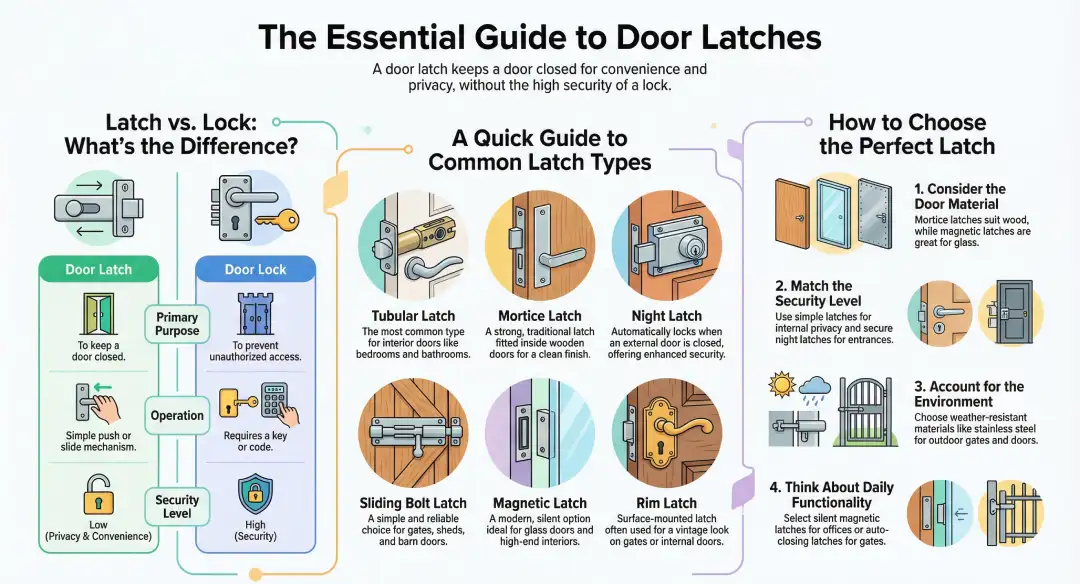
At its core, a door latch is a mechanism designed to keep a door closed. It works by engaging the door frame, holding the door in place, and securing it without needing a full locking mechanism. While a lock prevents unauthorized access and provides higher security, a latch offers a simpler solution for privacy, basic security, and convenience.
A door latch typically operates through a spring-loaded or sliding bolt mechanism, keeping the door closed but allowing easy operation. When you push or pull on the latch, it either engages or releases the bolt or latch plate, securing the door or allowing it to be opened. The primary function of a door latch is to:
- Keep the door closed: Preventing unwanted openings without the need for complex locking systems.
- Provide privacy: Ideal for interior doors such as bedrooms or bathrooms, offering a basic level of privacy.
- Allow easy operation: Latches are simple to use, typically requiring only a push or slide to engage or disengage the door.
While latches are not as secure as locks, they are perfect for doors that don’t require heavy-duty security but still need to remain closed under normal circumstances.
Why Are Door Latches Important?
Door latches are essential in many types of buildings, from homes to offices, gates, and public spaces. Their importance lies in their ability to keep doors secure, prevent unwanted access, and contribute to the overall functionality of a space. For instance, in homes, bathroom doors, bedroom doors, and closets typically use latches to maintain privacy while not needing the robust security of a lock. For gates and fences, latches offer a secure yet accessible way to control who can enter or exit a property.
Additionally, office spaces and commercial buildings often use latches for internal doors or temporary barriers. The right latch can significantly improve functionality, safety, and privacy while still being cost-effective and easy to maintain.
Key Differences Between a Latch and a Lock
While locks and latches are both used to secure doors, there are some important differences between the two:
- Locks require keys or codes for operation and provide higher security by preventing unauthorized access.
- Latches are simpler mechanisms that hold a door shut but typically don’t offer the same level of security as locks. They are more focused on keeping a door closed rather than preventing entry.
A door latch is often used in conjunction with a lock system for added security or simply as the primary mechanism when higher security isn’t necessary.
Types of Door Latches
There are many types of door latches, each suited for different needs. Whether you’re working with interior doors, gates, or cabinets, understanding the different latch types is crucial for selecting the right option. Here’s a breakdown of the most common types of door latches and their uses:
1. Tubular Latches
Tubular latches are one of the most commonly used types of latches, especially in interior doors. They are popular because of their simplicity, durability, and ease of installation. Because they are standard for most HDB and condo units, these are a core part of our residential locksmith services for homeowners looking for quick upgrades.
A tubular latch operates by using a spring-loaded mechanism inside a hollow tube that is installed in the door. The spring holds the door closed until it is released when the latch bolt is moved. Tubular latches are generally used in interior doors, bathrooms, and closets where security is not a primary concern but privacy and functionality are important.
2. Mortice Latches
A mortice latch is a more traditional type of latch that is typically installed into the door’s body (referred to as a mortice). Mortice latches are often embedded within the door, making them stronger and more secure compared to tubular latches. They come with an optional lock for extra security. For businesses requiring a more heavy-duty setup, we often recommend a professional commercial door lock replacement to ensure the new latch integrates perfectly with high-security door frames.
Mortice latches are ideal for wooden doors and external doors where you may want added privacy but not necessarily full locking capabilities. They are often seen in entry doors and high-end interior doors. These latches provide a more secure fit and are ideal for more durable, high-quality wooden doors.
3. Night Latches
A night latch is a type of latch designed for external doors, providing security while also allowing for easy locking from the inside. Night latches are often referred to as Yale locks.
Night latches automatically lock when the door is closed, and they can be engaged or disengaged from the inside with a simple turn of a knob. This latch is an excellent choice for main entrance doors and front doors, providing a simple yet effective way to secure the door with an additional locking mechanism.
4. Rim Latches
A rim latch is a latch mounted on the surface of the door, as opposed to being installed inside the door like a mortice latch. Rim latches are usually visible from the outside, offering a vintage or rustic appearance.
Rim latches are typically used in vintage homes or in garden gates where a simple, traditional mechanism is preferred. They are often found in interior doors and old-fashioned gates, offering a basic locking solution without the need for extensive installation work.
5. Roller Bolt Latches
A roller bolt latch uses a rotating roller mechanism to hold the door closed. When the door is closed, the roller mechanism automatically engages with the door frame to keep it secured.
These latches are typically found in gates, barn doors, and other high-traffic doors that require a quick and easy closing mechanism. Roller bolt latches are beneficial because they are quiet, efficient, and easy to operate, especially in environments with heavy door use.
6. Magnetic Latches
Magnetic latches use magnets to secure doors instead of mechanical locking mechanisms. When the door is closed, the magnetic force holds the latch in place.
Magnetic latches are commonly used in modern designs, glass doors, and high-end interior doors. These latches are sleek, easy to operate, and virtually silent, making them a popular choice for interior applications where aesthetics and convenience are important.
7. Spring-Loaded Latches
Spring-loaded latches are a simple mechanism that automatically engage the latch when the door closes, using a spring to pull the latch bolt into place.
This type of latch is commonly found in gates, garden doors, and sheds. Spring-loaded latches are particularly useful for areas where quick locking is needed, such as in outdoor settings where you want the door to lock immediately after closing.
8. Sliding Bolt Latches
A sliding bolt latch uses a bolt mechanism that slides into place to lock the door. This simple but effective mechanism secures the door with a sliding action, preventing it from being opened.
Sliding bolt latches are typically used in barn doors, gates, and storerooms, where simplicity and reliability are more important than advanced security features. They are also easy to install and maintain, making them a great choice for low-security applications.
9. Chain Latches
Chain latches are simple devices often used to provide additional security on doors. These latches allow for partial opening of the door while keeping it secure with a chain mechanism.
Chain latches are commonly used in front doors to provide extra safety while allowing partial opening for things like ventilation or greeting visitors. This type of latch provides some security while giving homeowners the option to keep the door slightly ajar.
How to Choose the Right Door Latch for Your Needs
Choosing the right door latch is not just about picking a design that looks good. It depends on how the door is used, where it is installed, and the level of safety or privacy you expect. A well-chosen latch improves daily usability and reduces long-term issues such as misalignment, frequent repairs, or accidental door openings.
Door Type and Material Considerations
The material and structure of the door play a major role in latch selection. Wooden doors work well with mortice latches because these latches are fitted inside the door, offering better strength and a clean finish. Metal doors usually pair better with tubular or spring-loaded latches, as these are easier to install and align correctly. For glass doors, magnetic latches are often preferred because they do not require drilling deep into the panel and provide smooth, quiet closing. Gates, barn doors, and outdoor doors benefit from roller bolt latches, sliding bolts, or spring-loaded latches due to their ability to handle frequent use and exposure to weather.
Security Level and Purpose of the Door
The function of the door determines how secure the latch needs to be. For internal doors such as bedrooms, bathrooms, and storage rooms, a simple tubular or mortice latch is usually enough to provide privacy. External doors or main entrances often require a night latch or rim latch, sometimes combined with a lock, to add an extra layer of protection. In commercial buildings or public areas, panic latches are essential because they allow quick exit during emergencies while still keeping the door secure under normal use. Selecting a latch that matches the required security level helps prevent misuse and improves safety. In Singapore, it is critical that these latches comply with the SCDF fire safety requirements for door hardware to ensure they don’t jam during an evacuation.
Environmental and Durability Factors
Environment is another important factor. Indoor doors are not exposed to moisture or temperature changes, so standard steel or alloy latches work well. Outdoor doors, gates, and service entrances require weather-resistant materials such as stainless steel or brass to avoid rust and jamming. In Singapore’s humid climate, choosing corrosion-resistant latches is especially important for long-term performance. A latch that suits the environment will last longer and operate smoothly with less maintenance.
Ease of Use and Daily Functionality
Daily use should always be considered. Some doors need to close automatically, which makes spring-loaded latches a good option. Other doors require silent operation, especially in homes or offices, where magnetic latches are more suitable. Sliding bolt latches are ideal where simple manual control is needed, such as storerooms or backyard gates. Matching latch functionality with real-life use reduces inconvenience and wear over time.
Why Professional Installation Might Be Necessary
While installing door latches is often a straightforward DIY task, some latches, such as mortice latches, may require specialized tools for proper installation. Additionally, certain high-security latches or automatic door systems may need professional expertise to ensure that they function correctly and securely.
If you’re unsure about which latch to choose or if your installation needs require expertise, it’s always a good idea to consult with a professional locksmith. At Locksmith Singapore, we can help you choose and install the best door latches to suit your needs, whether it’s for your home, office, or commercial space.
Conclusion: Understanding Door Latches and Choosing the Best One
Choosing the right door latch for your needs is crucial for both security and functionality. Whether you need a simple latch for a bathroom door or a more secure option for a main entrance, understanding the types of latches and their specific uses will help ensure you make the right decision. Always consider the environment, security requirements, and the door type when selecting the right latch.
At Locksmith Singapore, we specialize in helping you choose the most suitable door latches for your needs, whether it’s for home security, office use, or gates. Our expert team is ready to provide professional advice, installation, and support to make sure your property stays secure and accessible. If you’re ready to ensure your building is properly secured, contact Locksmith Singapore for a consultation!
Frequently Asked Questions (FAQs)
What is the difference between a door latch and a door lock?
A door latch is mainly used to keep a door closed and provide basic privacy, while a door lock is designed to prevent unauthorized access. Latches are easier to operate and are commonly used on internal doors, whereas locks offer higher security and usually require a key or code.
Can a door latch be used on external doors?
Yes, certain door latches such as night latches, rim latches, and sliding bolt latches are commonly used on external doors and gates. However, for better security, these latches are often paired with additional locking systems.
How do I know which door latch size I need?
The correct latch size depends on the door thickness, backset measurement, and the type of handle used. Measuring the door accurately or consulting a professional locksmith helps ensure the latch fits properly and works smoothly.
Can a door latch be repaired or adjusted?
Some door latches can be adjusted if the issue is related to alignment or wear. However, if the latch mechanism is damaged or worn out, replacement is usually the better option to maintain smooth operation and safety.